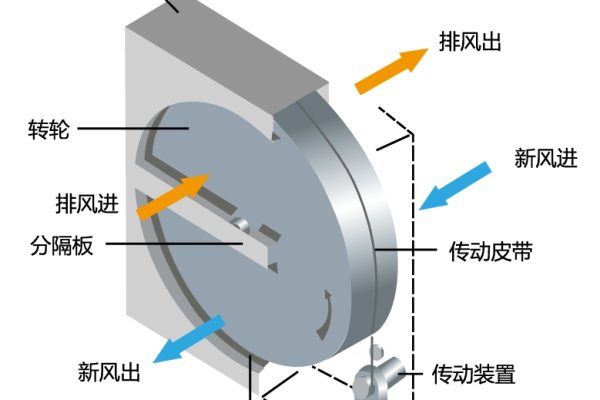
This stainless steel air-to-air plate heat exchanger is specifically designed for use in CO (Catalytic Oxidation) and RCO (Regenerative Catalytic Oxidation) systems. It efficiently recovers waste heat from high-temperature exhaust gases generated during catalytic combustion processes, significantly reducing energy consumption and improving overall system efficiency.
Constructed with high-quality stainless steel, the heat exchanger offers excellent corrosion resistance and durability, making it suitable for harsh industrial environments involving VOCs treatment. The plate-type structure ensures a large heat transfer area, enabling high thermal efficiency and stable performance under continuous operation.
By preheating incoming fresh air using recovered exhaust heat, the system reduces fuel consumption in the combustion chamber, lowers operating costs, and contributes to carbon emission reduction. The compact design allows easy integration into existing CO/RCO systems, and customizable dimensions ensure compatibility with various airflow and temperature requirements.
This solution is widely used in industries such as printing, coating, chemical processing, and painting, where VOCs treatment systems are essential. It is an ideal choice for enterprises seeking energy-saving upgrades and sustainable production solutions.
Catalytic oxidation is a mainstay of industrial VOC abatement. In a CO or RCO system the solvent-laden exhaust must be heated to the temperature where the catalyst converts the pollutants, and then the cleaned gas leaves the oxidizer still carrying most of that heat. A stainless steel air-to-air plate exchanger placed across the exhaust and the incoming fresh-air stream recovers a large part of that energy and returns it to preheat the combustion air entering the chamber. Because the burner only has to make up the difference, auxiliary fuel consumption drops substantially.
Material choice follows the duty. For many VOC streams 304 stainless is sufficient, while 316L is specified when the exhaust carries chlorides or other corrosive components. The plate stack provides a generous heat-transfer area in a compact envelope and suits continuous operation, but like any recuperator it needs periodic inspection for fouling from condensed organics. Integration is straightforward: the exchanger is sized to the oxidizer airflow and temperature profile and bolted into the duct between exhaust and supply. Printers, coaters, chemical plants, and paint lines running VOC-treatment equipment are the typical users, and the recovered heat directly improves the economics of an already-mandated emission-control step.
Frequently Asked Questions
What role does the plate exchanger play in a CO or RCO system?
It recovers heat from the hot, cleaned exhaust and uses it to preheat the incoming combustion air. The oxidizer burner then supplies only the remaining energy, cutting auxiliary fuel use.
Which stainless grade is used?
Construction is typically 304 stainless, upgraded to 316L when the VOC stream contains chlorides or other corrosive components that would attack a lower grade.
Will the plates foul from VOC-laden exhaust?
Over time condensed organics can accumulate on the plates. The plate design allows access for inspection and cleaning during planned maintenance, which keeps thermal performance stable.
Which industries use this recovery solution?
Printing, coating, chemical processing, and painting operations that run catalytic oxidation for VOC abatement are the main users, where the recovered heat improves the payback of mandated emission control.