Change the Pre-Filter on Pressure Drop, Not on the Calendar
a maintenance contract said “replace G4 panels every three months”. The paint shop ran two shifts in winter and one in summer. In July the panels came out almost clean; in February they were loaded solid for six weeks. Nobody had done anything wrong. The schedule was simply written for an average site that does not exist.
The small number, and the large one
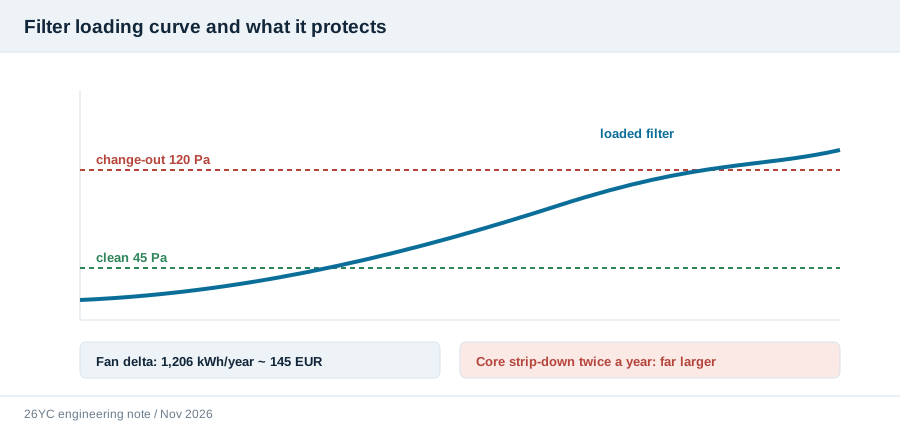
Take a 12,000 m3/h make-up air unit (3.33 m3/s) with a G4 panel starting at 45 Pa and a change-out setpoint of 120 Pa. Average differential over the loading cycle is about 82.5 Pa. At 62% fan efficiency:
- Average fan power for the filter: 3.33 x 82.5 / 0.62 = 443 W.
- If someone budgets against the clean 45 Pa figure: 3.33 x 45 / 0.62 = 242 W.
- Difference: 201 W x 6,000 h = 1,206 kWh/year, about €145 at €0.12/kWh.
That is a small number, and we tell clients that to their face. If the only saving were €145, we would not write an article about it.
The real cost is downstream. A loaded or badly seated pre-filter lets dust through to the recovery core. On a paint booth or an oven exhaust that means a foil channel cleaning every six months instead of every two years: say €900 for a strip-down and chemical wash, plus four hours of lost production, twice a year. The filter itself costs €18. The plate exchanger cleaning guide shows what that strip-down involves; the mine ventilation case is the extreme version, where frost and dust combine.
How we set the change-out point
Not from a catalogue. We put a differential pressure transmitter across the filter bank, log it for a few weeks, and set the alarm at the pressure where the fan can no longer hold design airflow — or earlier, if the downstream core is sensitive. For a G4 panel on a general AHU that is often 100–150 Pa; for a coarse panel ahead of a compact plate core we set it lower. The filter maintenance guide walks through the measurement setup, and pressure drop and fan energy explains why the fan curve, not the filter datasheet, should decide the limit.
Two details from the sites where this went badly:
- The frame, not the media. A new panel clipped into a warped holding frame bypasses around the edge. Measure across the whole bank, not across one panel.
- Seasonal setpoints. In a cold climate, a loaded pre-filter reduces supply airflow exactly when frost risk on the exhaust face is highest. Our frost protection guide und wheel defrost strategies assume design airflow; they do not hold when the filter is blinded.
What belongs in the specification
Three lines: an initial pressure drop at rated airflow, a change-out differential with an alarm, and a requirement that the filter bank be sealed and measurable. Then add the monitoring point to the BMS handover. A calendar interval can stay in the maintenance manual as a backstop, but it should never be the control.
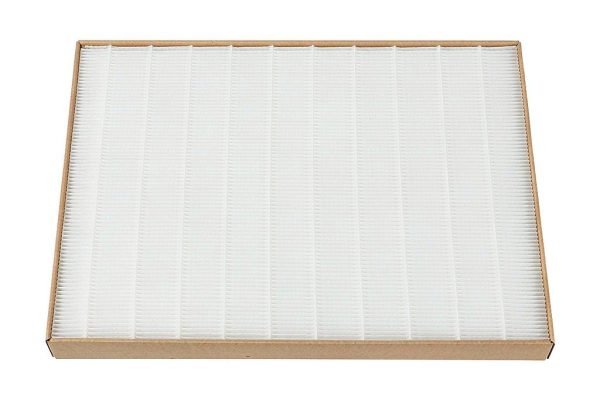
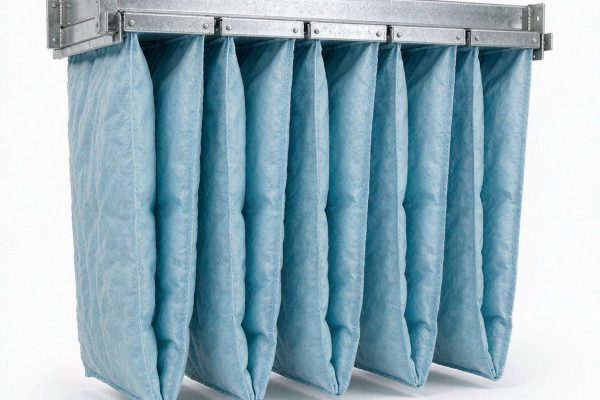
For the grade of pre-filter itself — panel, pocket, washable, G1 to G4 — see primary pre-filter selectionund the three-stage comparison if you are deciding what sits behind it.
Specify the right heat exchanger
Our engineers size the core to your airflow, temperature and pressure-drop budget, and select plate, rotary or heat-pipe recovery by application. Read the heat exchanger guide or contact us for a specification.
Related products
Plate, wheel or pipe recovery for HVAC and ventilation.
Stationary, high-surface-area cores for air and liquid.
High-effectiveness energy recovery for large airflows.
Passive, fully separated streams for clean applications.