Microchannel heat exchangers (MCHEs) typically offer higher heat exchange efficiency compared to traditional heat exchangers (such as shell-and-tube or finned tube types) due to their unique design and optimized structure. The following is an analysis of the efficiency of microchannel heat exchangers:
- High heat transfer area densityMicrochannel heat exchangers use tiny channels (typically 0.5-3mm in diameter) to significantly increase the heat exchange area per unit volume, resulting in a heat transfer coefficient that is 2-3 times higher than that of traditional heat exchangers.
- Enhanced turbulenceThe fluid flow within the microchannel is turbulent, which promotes heat transfer and reduces boundary layer thermal resistance.
- thin-wall designMicrochannels are typically made of highly thermally conductive materials (such as aluminum) with thin walls (about 0.1-0.5 mm) to reduce thermal resistance.
- Compact structureMicrochannel heat exchangers are small in size and light in weight, reducing the heat capacity of materials and improving the thermal response speed.
- Low fluid chargeMicrochannel design reduces refrigerant or fluid usage, lowers system heat loss, and improves cycle efficiency.
Related articles
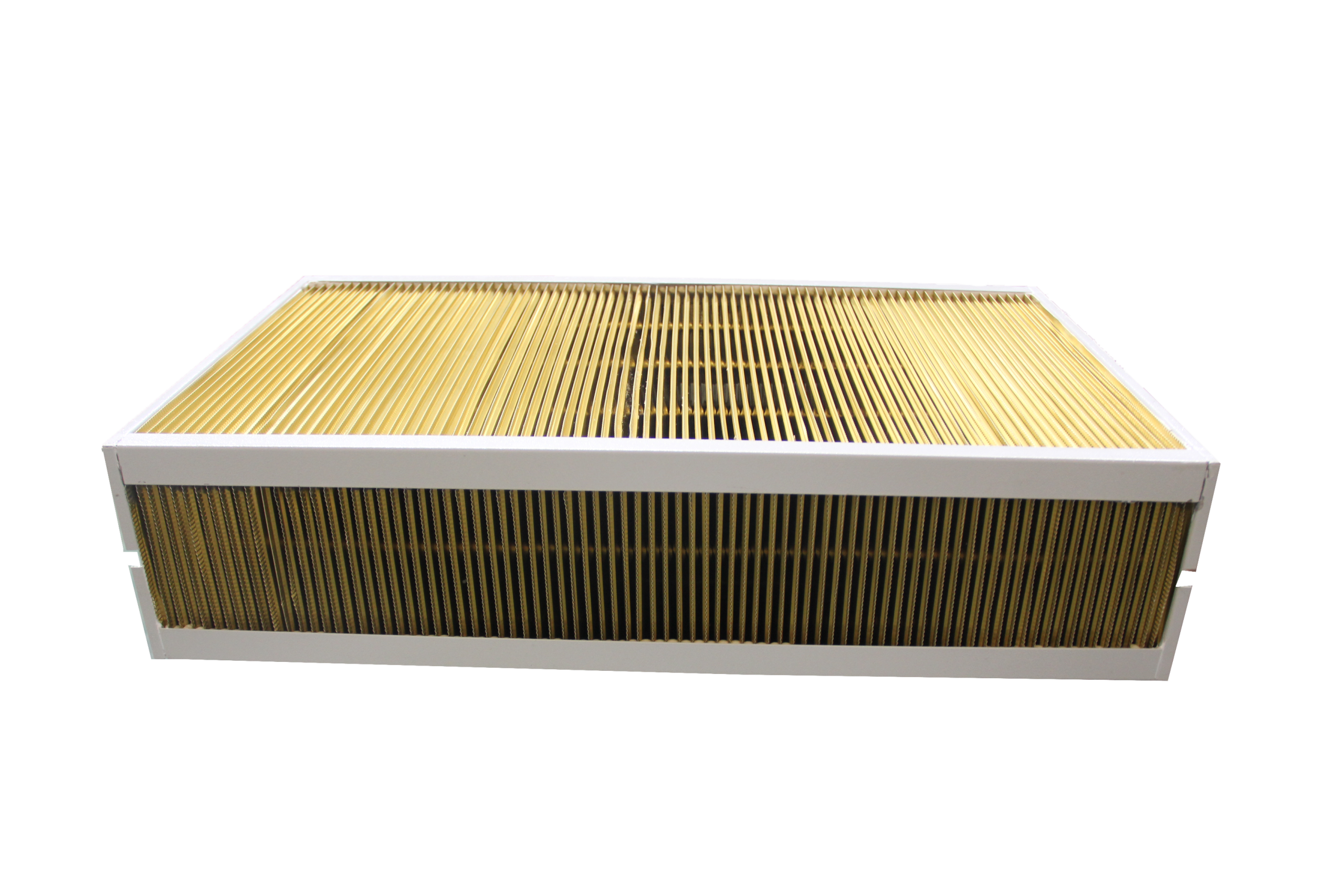
Applications of Counter-Flow Air-to-Air Heat Exchangers
Stainless Steel Air-to-Air Plate Heat Exchanger for CO/RCO Catalytic Combustion Exhaust Heat Recovery
Rectangular Sensible Heat Exchange Core for EV Charging Station Ventilation | Counterflow Air-to-Air Heat Exchanger
Customizable Hydrophilic Aluminum Foil Plate Heat Exchanger — Fresh Air Unit for Boiler Exhaust White Plume Reduction
Process principles and utilization methods of flue gas waste heat recovery in the field of industrial coatings
 English
  简体中文
简体中文  Deutsch
  日本語
日本語  한국어
한국어  Français
  Español