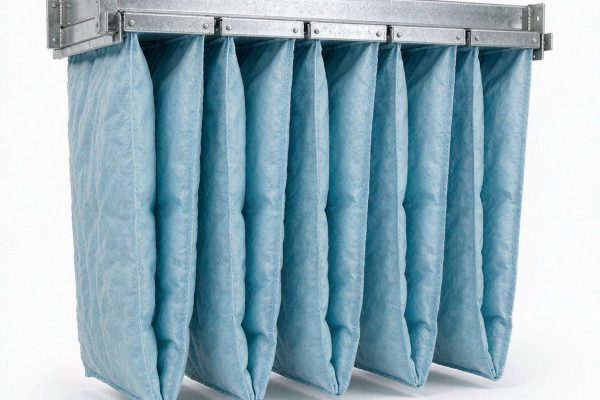
Synthetic Fibre (Polyester / Polypropylene)
The default for primary and medium filters. Progressive-density layering captures coarse then fine particles at low resistance. 优点: economical, lightweight, disposable, good dust-holding. 缺点: not for high heat; single-use.
Glass Fibre
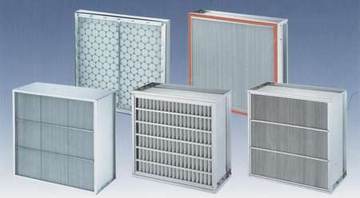
Very fine, thermally stable fibres used in high-efficiency panels and HEPA media. 优点: high efficiency, tolerates higher temperatures, inert. 缺点: brittle, needs careful handling, higher cost.
Activated Carbon
Not a particulate filter-it adsorbs gases, odours and VOCs. Usually a loose fill or bonded sheet behind a particulate pre-filter. 优点: solves smell/chemical complaints. 缺点: saturated media must be replaced; does nothing for dust on its own.
Metal Mesh / Aluminium
Washable, reusable screens for coarse pre-filtration and grease. 优点: indefinite reuse, robust, ideal for kitchens and intake hoods. 缺点: very low efficiency; only a first stage.
Selection Cheat-Sheet
| If you need | Choose |
|---|---|
| Cheap general pre-filter | Synthetic fibre, G3/G4 |
| High temp / oven air | Glass fibre |
| Odour, smoke, VOC | Activated carbon (after particulate) |
| Washable, greasy intake | Metal mesh |
| HEPA/ULPA stage | Glass-fibre or PTFE mini-pleat |
Choosing a filter material is ultimately a trade between upfront cost, operating conditions and how the element is serviced. Synthetic fibre remains the workhorse for primary and medium grades because progressive-density construction delivers good dust holding at low resistance and low price, but it is not suited to sustained high temperatures. Glass fibre earns its place where heat stability and high efficiency matter, notably in HEPA media and oven or process-air duty, at the cost of brittleness and handling care. Activated carbon should be viewed as a gas-phase device rather than a dust filter: it sits behind a particulate pre-filter and is selected for odour, smoke or VOC complaints, with service driven by saturation rather than pressure drop. Metal mesh and aluminium screens are the reusable option for grease and coarse intake air, and PTFE or glass-fibre mini-pleat media carry the HEPA and ULPA stages where sub-micron control is required.
常见问题
Which filter material suits high-temperature oven air?
Glass fibre, because its thermally stable fibres tolerate higher temperatures where synthetic media would degrade.
What material solves odour, smoke or VOC problems?
Activated carbon, installed as a stage behind a particulate pre-filter; it adsorbs gases but does nothing for dust on its own.
Are metal mesh filters reusable?
Yes, aluminium or stainless mesh screens can be washed and reused, but their efficiency is very low so they only serve as a coarse first stage.
What media is used for HEPA and ULPA stages?
Very fine glass-fibre or PTFE mini-pleat media, which provide the high efficiency and low penetration needed for sub-micron control.
相关产品
面向暖通空调与通风的板式、旋转式或热管回收。
空气与液体用大表面积固定芯体。
大风量用高效能量回收。
用于洁净场合的被动、完全分离气流。