Watch the Pressure Drop, Not the Date
As a filter loads, its pressure drop (ΔP) rises and the fan works harder. The rule: replace when ΔP reaches the manufacturer’s final limit-typically about 2× the initial ΔP-or when energy cost outweighs the filter price.
Typical Service Intervals
| Stage | Initial ΔP | Replace at | Typical life |
|---|---|---|---|
| Primary G3/G4 | 20-45 Pa | ~90-100 Pa | 3-6 months |
| Medium F5-F9 | 45-90 Pa | ~130-180 Pa | 6-12 months |
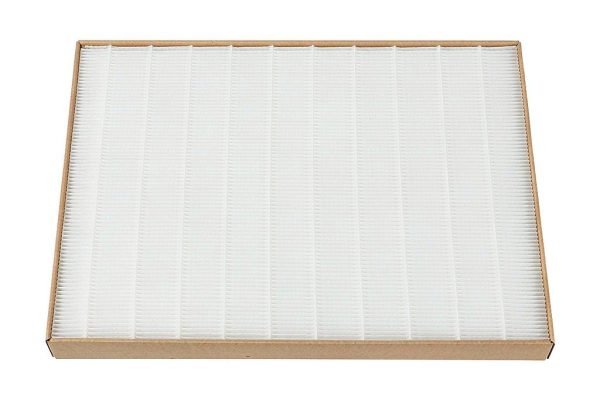
| HEPA H13/H14 | 100-250 Pa | Per test / 2-3 yr | 1-3 years |
How to Monitor
- Fit a differential pressure gauge or manometer across each bank.
- Log readings monthly; trend the slope to predict changeout.
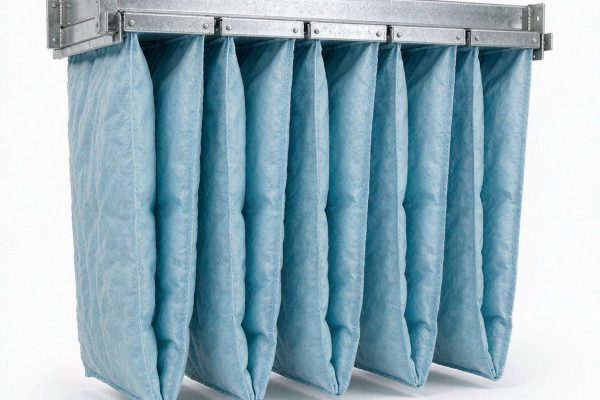
- Bag collapse, visible discolouration or odour breakthrough are visual cues.
Safe Changeout
- Shut the fan, lock out, and use PPE for contaminated media.
- Disposable media: bag-in/bag-out; never wash-and-reuse synthetics.
- HEPA: after install, run a PAO/DOP leak scan to confirm integrity.
- Log every changeout with date, location and part number.
The practical takeaway from any maintenance programme is to manage filters by condition, not by calendar. A differential pressure gauge fitted across each bank turns an invisible process into a measurable one, and logging readings monthly builds a trend that predicts changeout before performance falls away. A primary stage that is allowed to run to its final pressure drop not only wastes fan energy but also accelerates loading of the more expensive downstream filter, so protecting it pays back twice. For HEPA stages, replacement is governed less by a fixed date and more by periodic integrity testing; a PAO or DOP scan after installation and after each changeout confirms the seal and media are sound. Good housekeeping matters too: lock out the fan, use appropriate PPE for contaminated media, and record every changeout with its date, location and part number so that performance and compliance can be traced.
Frequently Asked Questions
When should an air filter be replaced?
Replace it when its pressure drop reaches the manufacturer's final limit, often about twice the initial drop, or when the extra fan energy cost outweighs the price of a new filter.
How should filter performance be monitored?
Fit a differential pressure gauge across each bank, log the readings monthly and trend the slope so changeout can be predicted before efficiency falls.
How often do HEPA filters need changing?
Usually every one to three years and governed by periodic leak testing rather than a fixed calendar date; integrity is confirmed with a PAO or DOP scan.
What safety steps apply during changeout?
Lock out the fan, wear PPE for contaminated media, use bag-in bag-out handling for disposables, and leak-scan HEPA elements after installation.