
A practical selection framework comparing plate, heat pipe, and rotary enthalpy exchangers across efficiency, cross-contamination, pressure drop, and lifecycle cost for industrial ventilation projects.
Data Center Heat Recovery: Capturing Server Room Exhaust with Rotary Energy Wheels
Server rooms reject enormous, constant heat. An energy recovery wheel between the exhaust and make-up air streams cuts the cooling load and can redirect that warmth to heat adjacent office space. For data centers chasing PUE, recovery on the ventilation air is a straightforward win. The load you can recover IT power is almost entirely […]
Frost Protection for Air-to-Air Plate Heat Exchangers in Cold-Climate Ventilation
In cold-climate ventilation, an exhaust-to-supply air-to-air plate exchanger can frost on the exhaust side when the supply outlet drops below the dew point of the humid exhaust. Frost narrows the channels, raises pressure drop and eventually blocks the core. Knowing when it forms — and which protection strategy to use — keeps the unit efficient […]
Laboratory Fume Hood Exhaust Heat Recovery: Rotary Wheels vs Plates for Make-Up Air
Laboratories exhaust enormous volumes of conditioned air through fume hoods, often around the clock. Recovering the energy in that exhaust before it leaves the building is one of the fastest-payback upgrades in laboratory HVAC — and the choice between a rotary wheel and a plate exchanger decides how much you actually save. Why labs bleed […]
Commercial Kitchen Heat Recovery: Capturing Energy from Exhaust with Air-to-Air Heat Exchangers
Commercial Kitchen Heat Recovery: Capturing Energy from Exhaust with Air-to-Air Heat Exchangers Walk into any busy restaurant kitchen at dinner service and you will feel it: a wall of hot, greasy exhaust air being thrown out through the hood, while at the same time the make-up air unit is burning energy to condition cold outside […]
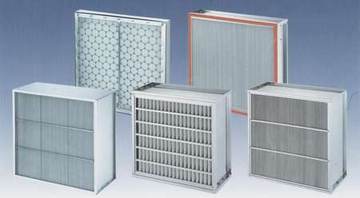
SCAC Activated Carbon Filter Cartridge
What Is an SCAC Activated Carbon Filter Cartridge? The SCAC activated charcoal filter cylinder is a modular gas-phase filtration unit for commercial and industrial HVAC systems. It is engineered to strip odours and harmful gases from ventilation air, protecting occupants, equipment and stored collections. How Activated Carbon Works Granular activated carbon contains a vast network […]
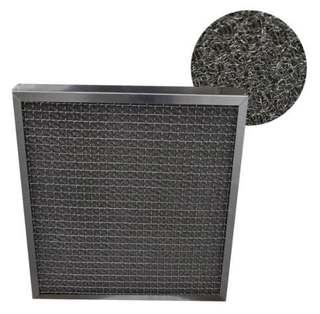
HWS Oil Mist Filter & Salt Mist Eliminator
What Is an HWS Oil Mist Filter? The HWS series is a specialised oil mist and salt mist eliminator built for demanding industrial and coastal environments. It captures airborne oil aerosols from machine shops and kitchens, and salt-laden mist in seaside or offshore installations, protecting downstream equipment and improving workplace air quality. Construction & Materials […]
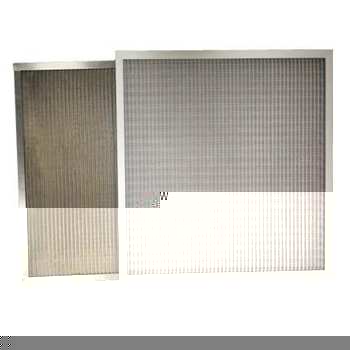
PET Biochemical Cotton Filter Media & Resin Mesh Panel Filters
What Is PET Biochemical Cotton Filter Media? PET biochemical cotton—sometimes called resin mesh filter media or mesh panel filter cotton—is one of the most widely used filter materials on the market. In aquariums it works as a biological filtration substrate: beneficial nitrifying bacteria colonise its surface and convert toxic ammonia (NH₃/NH₄⁺) and nitrite (NO₂⁻) into […]
Organic Rankine Cycle (ORC): Turning Low-Grade Waste Heat into Electricity
Heat That Usually Goes to Waste Many industrial processes reject heat at temperatures too low for conventional steam turbines but still high enough to be useful. Instead of venting it, that heat can be converted into electricity with an Organic Rankine Cycle. How ORC Works An ORC is a Rankine cycle that uses an organic […]
Waste Heat Recovery in Food and Agriculture Drying: Why Plate Exchangers Win
The Drying Energy Problem Drying is one of the most energy-intensive steps in food and agriculture processing: grains, herbs, vegetables, and spices all need controlled heat over long periods. Much of that thermal energy leaves the plant as hot, moist exhaust air. Recovering Heat from Exhaust Exhaust from drying tunnels still carries usable sensible heat. […]