What an Air Filter Actually Does
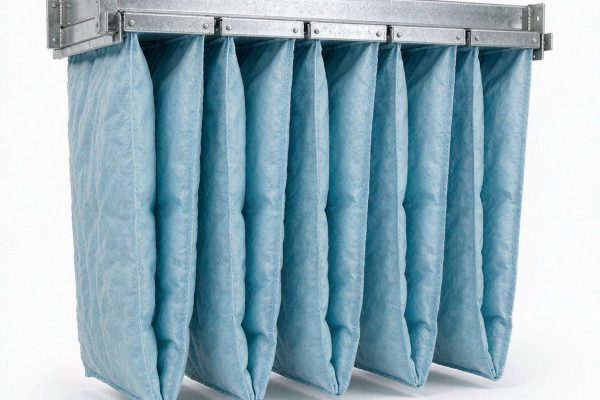
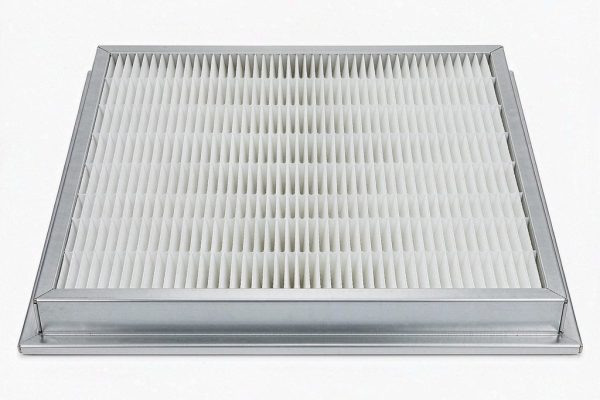
An air filter is a barrier placed in an airstream to remove solid particles-dust, pollen, soot, fibres, bacteria and many viruses-before that air reaches people, equipment or a downstream process. In an HVAC system the same air may be recirculated dozens of times a day, so a filter is the component that keeps that loop clean.
How Filtration Works
No single mechanism captures every particle. Real filters combine four:
- Interception – a particle following the airstream touches and sticks to a fibre.
- Impaction – heavier particles cannot bend around fibres and embed themselves.
- Diffusion – the random Brownian motion of sub-micron particles throws them onto fibres (dominant in HEPA media).
- Electrostatic attraction – charged synthetic fibres pull in oppositely charged particles, boosting capture at low resistance.
Three Numbers That Define a Filter
| Term | What it means | Why it matters |
|---|---|---|
| Efficacité | Share of particles removed, by size | Higher = cleaner air, but usually higher resistance |
| Pressure drop (ΔP) | Fan energy needed to push air through | Lower = lower running cost; rises as the media loads |
| Dust-holding capacity | Mass of particles before end-of-life | Higher = longer service life, fewer changeouts |
Why Every System Needs One
- Protects occupants’ health (allergy, asthma, infection control).
- Protects equipment-coils, fans and sensors last longer when clean.
- Keeps processes on-spec in pharma, food, electronics and labs.
- Reduces cleaning and repaint cycles in industrial buildings.
Choosing the right stage-pre, medium or HEPA-is covered in our efficiency-class and application guides.
Questions fréquemment posées
How does an air filter actually capture particles?
Media captures dust through impaction, interception, diffusion and electrostatic attraction as air passes through the fibres.
Why do HVAC systems need air filters?
Filters protect coils and fans from fouling, maintain indoor air quality and help meet hygiene and health requirements.
What is dust-holding capacity?
It is the total mass of particles a filter can hold before it reaches its final pressure drop and must be replaced.
Do filters clean both return and outdoor air?
In mixed-air systems both streams are filtered, and correct placement of pre and final stages determines how well each is protected.
Spécifiez le bon échangeur
Nos ingénieurs dimensionnent le noyau selon votre débit, température et budget de perte de charge, et choisissent la récupération par plaque, rotative ou caloduc selon l'application. Lisez le guide de l'échangeur , ou contactez-nous pour une spécification.
Produits connexes
Récupération par plaque, rotative ou caloduc pour le CVC et la ventilation.
Noyaux stationnaires à grande surface pour l'air et le liquide.
Récupération d'énergie à haute efficacité pour grands débits.
Courants passifs et totalement séparés pour applications propres.