
Purpose of EN 308 EN 308 is the European standard that specifies test procedures for air-to-air heat transfer in heat recovery equipment. Rather than setting a pass/fail threshold, it defines how to measure temperature effectiveness and, for enthalpy devices, moisture effectiveness under controlled inlet conditions. What Gets Measured The test fixes inlet dry-bulb temperatures and, […]
Face Velocity: The Single Number That Sets Core Size and Pressure Drop
Definition Face velocity is the approach speed of air entering the core face: face_velocity = volumetric_flow / core_face_area It is measured in metres per second (m/s). Typical range For HVAC air-to-air cores, face velocity usually sits between 1.5 and 3.5 m/s. Lower is gentler on the core and the fan; higher packs more flow into […]
The epsilon-NTU Method: Predicting Heat Exchanger Performance
Effectiveness, the practical metric Effectiveness (epsilon) is the ratio of actual heat transferred to the maximum thermodynamically possible: epsilon = actual_heat_transfer / (Cmin x (Thot_in - Tcold_in)) It is the number you see quoted as "70% efficient" for a recovery core, and it is directly related to the efficiency metrics reported for air-to-air units. NTU: […]
China Heat Exchanger Manufacturing Clusters: Where Recovery Equipment Is Built
China: The World's Largest Heat Exchanger Producer China is the single largest producer of heat exchangers in the world, spanning plate, shell-and-tube, finned-tube, heat-pipe and air-to-air recovery units. Decades of industrial build-out, a deep supplier network and strong export competitiveness have concentrated production in a handful of regional clusters. Liaoning Changtu - the 'China Heat […]
Heat Exchanger Selection by Climate: Cold, Temperate, Hot-Humid
Cold climates (heating-dominated) Long, sub-zero winters make frost the enemy. Rotary wheels need purge sectors and occasional defrost; plate exchangers need bypass or preheat. Frost protection strategies are mandatory. Sensible-only recovery is usually enough because winter air is dry. Temperate climates Mild seasons with both heating and cooling loads favor balanced, all-season recovery. Plate and […]
Plate vs Rotary vs Heat Pipe: How to Choose a Heat Exchanger
Choosing the right air-to-air heat exchanger depends on airflow, temperature, humidity, installation space, and contamination risk. This guide compares the three most common technologies. Quick Comparison Feature Plate Exchanger Rotary Wheel Heat Pipe Efficiency High (70–85 %) High (75–85 %) Moderate (50–70 %) Moving parts None Motor/bearings None Cross-contamination Very low Low with purge Zero […]
RESET Air Standard
RESET Air is the world’s first sensor-based, performance-driven indoor-air-quality certification. Its Commercial Interiors v2.0 standard is about continuous monitoring and transparent reporting, not a one-time design check. This article summarizes the monitored parameters and the targets a space must hold. What Gets Monitored RESET requires continuous monitors covering at least 80% of occupants across all […]
Sensible vs Total Energy Recovery: How to Pick the Right Exchanger
A practical guide to choosing between sensible-only and total-energy recovery for commercial AHUs, with capital cost ranges and break-even analysis.
Plate vs Heat Pipe vs Rotary Heat Exchanger: Which One to Specify
A practical selection framework comparing plate, heat pipe, and rotary enthalpy exchangers across efficiency, cross-contamination, pressure drop, and lifecycle cost for industrial ventilation projects.
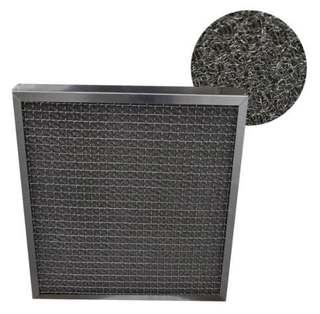
HWS Oil Mist Filter & Salt Mist Eliminator
What Is an HWS Oil Mist Filter? The HWS series is a specialised oil mist and salt mist eliminator built for demanding industrial and coastal environments. It captures airborne oil aerosols from machine shops and kitchens, and salt-laden mist in seaside or offshore installations, protecting downstream equipment and improving workplace air quality. Construction & Materials […]